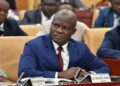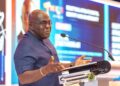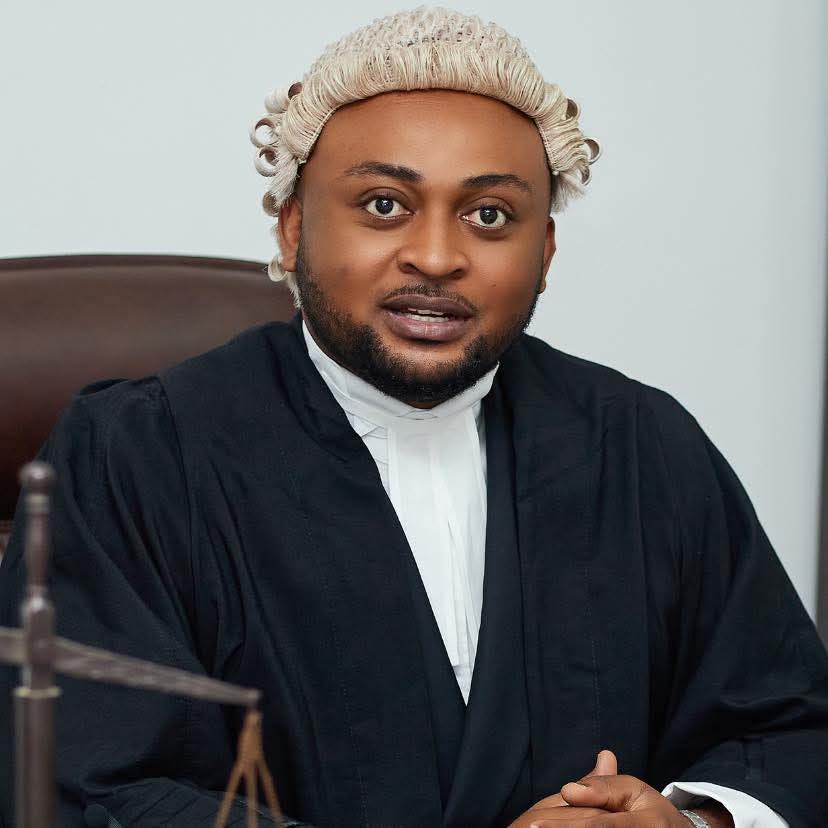
Member of Parliament for Old Tafo Ekow Vincent Assafuah has posited that the removal of Justice Gertrude Torkornoo as Chief Justice poses a grave threat to Ghana’s judicial independence.
The lawmaker asserts that the move, orchestrated under Article 146 of the Constitution, was a calculated political maneuver by the government of President John Dramani Mahama.
He alleges that the process, particularly the role of the Council of State, was a mere formality.
Mr. Assafuah noted that the President appointing 11 members, the Council’s determination of a prima facie case against the Chief Justice was a rubber stamp for executive interests.
This, he claimed, effectively makes the Chief Justice’s tenure dependent on the President’s will, subverting the principle of judicial autonomy enshrined in Articles 125 and 127.
He dismissed the allegations against the Chief Justice, such as traveling with her spouse, as flimsy at best.
He suggests these weak claims were used to politically unseat her, highlighting what he sees as a dangerously low threshold for removal under Article 146(1).
Further complicating the matter, Assafuah points to a key procedural flaw in Article 146(6), which allows for a five-member impeachment committee composed of two Supreme Court Justices and three non-lawyers.
According to him, this structure places a decisive majority in the hands of individuals without legal training, making the process vulnerable to partisan manipulation.
He went on to state that the refusal of the Human Rights Court to hear the Chief Justice’s petition is cited by Assafuah as a chilling sign that justice is no longer blind.
He warns that if the head of the judiciary cannot secure a fair hearing, there is little hope for the average Ghanaian.
He stressed that President Mahama and the NDC government are establishing a dangerous precedent, where the judiciary is at the mercy of the executive.
Below is the full statement
MY TAKE ON THE REMOVAL OF THE CHIEF JUSTICE
The removal of Chief Justice Gertrude Torkornoo is not just a constitutional setback; it is a calculated political maneuver that strikes at the very heart of our democracy. By exploiting the flaws in Article 146, President John Dramani Mahama has turned what should have been a sacred constitutional safeguard into a partisan weapon. With eleven of the Council of State members appointed by him, the so-called “consultation” in determining a prima facie case was nothing more than a rubber stamp for executive interest.
What this means is simple but frightening, the Chief Justice is no longer truly independent. Her tenure has been made coterminous with that of the President, reducing the head of our judiciary into a political casualty at the whim of the executive. That is not democracy, it is executive capture of the judiciary.
Even more disturbing, the Human Rights Court refused to assume jurisdiction over her petition. Think about the message that sends, if the Chief Justice herself cannot secure a fair hearing, then what hope exists for the ordinary Ghanaian? This is the clearest evidence yet that under the NDC government, justice is no longer blind, it is bound and gagged.
The allegations that birthed this removal were flimsy at best, and laughable at worst. Travelling with her spouse, for instance, is hardly the “stated misbehaviour” envisioned by Article 146(1). Yet such weak claims were enough to unseat a Chief Justice, exposing how low the threshold has been set when political expediency is at play. And while Article 146(6) itself provides that the impeachment committee be made up of two Supreme Court Justices and three other members who are not lawyers, this arrangement has proven deeply problematic. In practice, it allows non-lawyers to hold the decisive majority on technical legal issues. Questions of admissibility, procedure, and law can effectively be settled by persons without the training to fully appreciate them. This constitutional flaw, left uncorrected, tilts the balance away from legal scrutiny and leaves the process vulnerable to partisan manipulation.
This dangerous precedent is now part of Ghana’s constitutional fabric. Judicial independence, guaranteed under Articles 125 and 127, has been sacrificed on the altar of political control. And make no mistake, this is the legacy President Mahama and the NDC are writing! A judiciary at the mercy of the executive, a democracy hollowed out by partisanship, and a Constitution whose spirit has been trampled upon.
This is an attack on the rule of law and a betrayal of the promise of “Freedom and Justice.” If unchecked, this precedent will haunt Ghana for years to come. It is now the duty of Parliament and every Ghanaian who believes in democracy to fight for reforms that will insulate the judiciary from this kind of political manipulation.
History will record that under President Mahama, Ghana crossed a line where the removal of a Chief Justice was reduced to a political project. Whether we allow that precedent to stand unchallenged will determine the true strength of our democracy.
By: Rainbowradioonline.com/Ghana