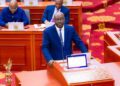
The Governor of the Bank of Ghana (BoG), Dr Johnson Asiama, has warned that the intensifying Middle East conflict poses additional risks to Ghana’s inflation forecast.
He noted that disruptions to key energy and shipping routes are heightening volatility in global oil markets, potentially increasing the cost of imported fuel.
He said this during the opening of the 129th Monetary Policy Committee (MPC) meeting in Accra on Monday, March 17, 2026.
According to him, sustained oil price increases could trigger imported inflation and tighten global financial conditions.
Although geopolitical tensions may lead to higher gold prices, benefiting Ghana’s trade balance, he stressed that the overall impact could exacerbate inflationary pressures.
“This conflict is disrupting key energy and shipping corridors; it is increasing volatility in global oil markets; and it is introducing new uncertainty into the trajectory of global inflation. ”.
“For Ghana, the transmission channels are clear; the sustained oil price increases could raise the risk of imported inflation, and it could also tighten global financial conditions,” he said.
He added that fiscal performance had also improved, with the country recording a primary surplus of 2.6 per cent of gross domestic product (GDP) at the end of 2025, reversing a deficit of 3.9 per cent a year earlier.
Additionally, Ghana’s gross international reserves also increased to $14.5 billion, equivalent to 5.8 months of import cover, Dr Asiama said.
“Taken together, these indicators point to an economy that is stabilising more quickly than many had expected,” he said, adding that such gains reflected the effectiveness of the ongoing economic reforms and policy discipline.
By: Rainbowradioonline.com/Ghana