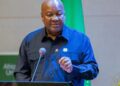
Ghana hosted the opening of the Next Steps Conference on Reparatory Justice on Thursday, June 18, 2026, where Ghanaian President John Dramani Mahama introduced a trio of international panels aimed at advancing the global reparatory movement.
The President emphasised that these new bodies are structured to convert the worldwide acknowledgment of slavery’s historical impact into tangible outcomes.
He explained that they will offer the strategic framework, technical expertise, and legal backing necessary to enhance international collaboration on the matter.
“I am pleased to announce the establishment of three global panels which will serve as the pillars of the next phase of this international effort,” he said.
The initial group is designed as a high-level consultative body to steer diplomatic engagement. “The first is a global advisory panel on reparatory justice comprising heads of state and government, eminent leaders and public figures, who will provide strategic guidance to advance international dialogue and cooperation,” he said.
The second unit is dedicated to returning historical assets and heritage materials seized during colonialism and the transatlantic slave trade to their native lands.
“The second is an expert panel on the restitution of cultural artefacts, which will support efforts to facilitate the return of all cultural properties, archives, sacred objects and historical treasures to their rightful communities and countries of origin,” he said.
The final committee will gather prominent legal experts to formulate frameworks rooted in global jurisprudence.
“The third is a global legal panel on reparatory justice, which will bring together distinguished jurists and legal scholars,” he said, adding that it would help develop approaches grounded in “international law, human dignity and justice.”
President Mahama concluded by clarifying that these panels are meant to complement existing state and institutional frameworks rather than supplant them.
“These panels are not intended to replace the work of governments, regional organizations or international institutions,” he said. “Rather, they are intended to strengthen that work by providing intellectual, technical and policy support.”
By: Rainbowradioonline.com/Ghana