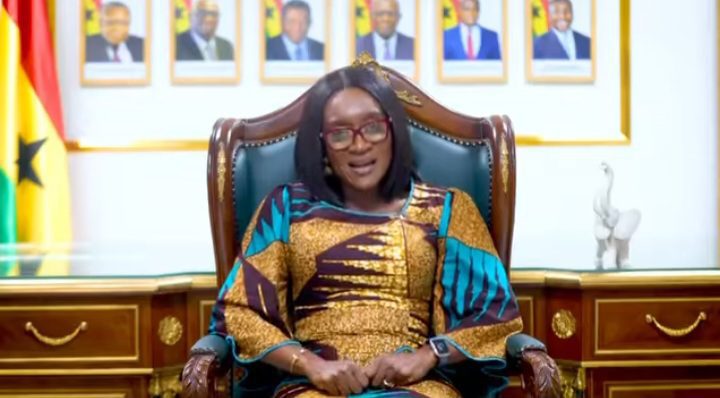
Former Deputy Finance Minister Abena Osei-Asare has called on President John Dramani Mahama to immediately order a full, independent investigation into the Domestic Gold Purchase Programme following reported gross losses amounting to approximately US$1.7 billion (GH¢22 billion).
Addressing a recent fact-check report regarding figures cited from financial accounts, Mrs Osei-Asare maintained that correcting the attribution of a single figure does not diminish the gravity of the staggering financial losses incurred under the scheme.
According to her, while the fact-check rightly clarified an attribution relating to an IMF confirmation of a US$214 million loss on the ASM doré component through the third quarter of 2025, the broader accountability question remains unaddressed.
“I have taken note of the JoyNews fact-check. It correctly points out that I attributed the US$214 million figure to the Bank of Ghana’s 2025 audited financial statements. That figure was an IMF confirmation relating to the ASM doré component of the Gold for Reserves programme through the third quarter of 2025. Fact still remains that at the end of the third quarter, BoG had incurred a loss of $214 Million on behalf of Goldbod,” she stated.
Mrs Osei-Asare stressed that narrative corrections should not distract from the substantial quasi-fiscal risks highlighted by international financial institutions, emphasizing that the reported gross loss represents more than half of the total US$3 billion facility Ghana secured under its International Monetary Fund (IMF) economic adjustment programme over three years.
“Let us put that figure in perspective. Ghana subjected itself to a difficult IMF-supported economic adjustment programme backed by a facility of about US3 billion. We are now confronted with reported gross losses of approximately US1.7 billion from one programme, involving gold — one of Ghana’s most valuable commodities. That is more than half the value of the entire IMF facility. No serious government can treat a loss of that magnitude as an accounting footnote,” she argued.
She questioned how a reported GH¢21.89 billion gross loss reconciles with the GH¢9.1 billion net figure recorded in the central bank’s accounts, demanding full disclosure on transaction costs, fees, discounts, and premiums absorbed during execution.
Renewing her demand for executive action, the former Deputy Minister insisted that the Ghanaian taxpayer must be given full transparency on how national assets were managed.
“My central point therefore remains unchanged: the country deserves a credible explanation of the approximately GH¢22 billion — about US$1.7 billion — in gross losses reported in relation to the programme, and an independent investigation into how those losses arose,” she demanded.
She added that the primary public interest lies in establishing where the money went, why the losses occurred, and putting stringent safeguards in place to prevent a recurrence, concluding that “correcting a source of one figure does not make GH¢22 billion disappear.”
Below is the full statement
LET’S ALL PAY ATTENTION TO THE LOSS OF $1.7 BILLION BY GOLDBOD IN ONE YEAR, WHICH IS MORE THAN HALF OF THE $3 BILLION WE RECEIVED FROM THE IMF PROGRAM IN 3 YEARS.
I have taken note of the JoyNews fact-check. It correctly points out that I attributed the US$214 million figure to the Bank of Ghana’s 2025 audited financial statements. That figure was an IMF confirmation relating to the ASM doré component of the Gold for Reserves programme through the third quarter of 2025. Fact still remains that at the end of the third quarter, BoG had incurred a loss of $214 Million on behalf of Goldbod.
But correcting the source of one figure does not explain away the losses.
The IMF’s latest assessment is unequivocal that the Domestic Gold Purchase Programme generated substantial losses and exposed the Bank of Ghana to significant quasi-fiscal risks. More importantly, the very JoyNews fact-check records a GH¢21.89 billion gross loss on doré gold, while the Bank’s audited accounts report approximately GH¢9.1 billion in net losses on gold transactions.
Let us put that figure in perspective. Ghana subjected itself to a difficult IMF-supported economic adjustment programme backed by a facility of about US$3 billion. We are now confronted with reported gross losses of approximately US$1.7 billion from one programme, involving gold — one of Ghana’s most valuable commodities. That is more than half the value of the entire IMF facility. No serious government can treat a loss of that magnitude as an accounting footnote.
That is the issue that demands an answer.
How did losses of this magnitude arise? How is the GH¢21.89 billion gross loss reconciled with the GH¢9.1 billion net figure? What amounts were absorbed through fees, discounts, premiums and other transaction costs? and did the Ghanaian taxpayer receive value for money?
A fact-check of one attribution cannot become a distraction from these far more serious questions.
My central point therefore remains unchanged: the country deserves a credible explanation of the approximately GH¢22 billion — about US$1.7 billion — in gross losses reported in relation to the programme, and an independent investigation into how those losses arose.
I accordingly renew my call on President Mahama to order a full investigation into the Domestic Gold Purchase Programme.
The public interest lies not in debating who cited which document, but in establishing **where the money went, why these losses were incurred, how they occurred and what stringent safeguards must be put in place to prevent a recurrence.
That is the accountability question. Correcting a source of one figure does not make GH¢22 billion disappear.
By: Rainbowradioonline.com/Ghana