Emerging entrepreneurs in Ghana’s digital economy must prioritize proper financial discipline and strict legal compliance if they are to build sustainable ventures capable of attracting investment and surviving regulatory scrutiny.
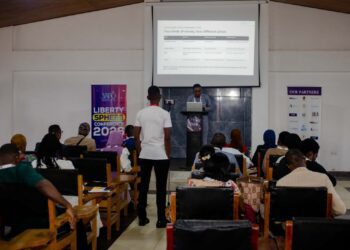
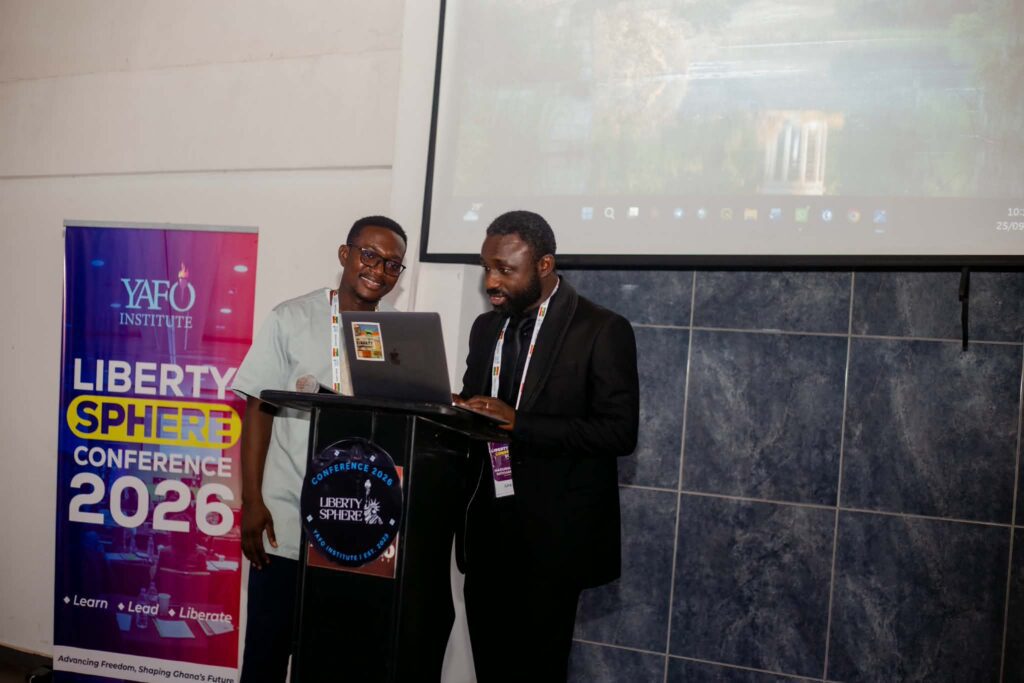
This was the central theme during a two-hour session on access to finance and legal preparedness, held on 25 September 2026 as part of the Liberty Sphere Conference.
The event brought together industry experts and young business owners to examine the institutional foundations required to transition promising ideas into scalable, investable enterprises.

Delivering the opening presentation on navigating startup finance, Peter Asare Nyarko, Executive Director of CFLE Africa, challenged the common belief that expanding a venture ecosystem is merely a matter of pumping more capital into the market.
He explained that a functioning ecosystem relies heavily on the balanced interaction of capital, talent, technology, customer demand, and financial capability.
Mr Nyarko urged founders to move away from viewing equity investment as the default route to growth. Instead, he advised early-stage businesses to explore customer revenue and grants, reserving debt for stages where cash flows can support repayment, and equity for times when external capital is genuinely required to fund expansion.
To help entrepreneurs engage investors effectively, the session covered core concepts such as valuation, dilution, capitalization tables, burn rates, and financial runway. Demonstrating the long-term impact of funding choices, Mr Nyarko contrasted raising GH¢1 million through equity with securing a revenue-based loan, highlighting the critical trade-off between giving up ownership and managing repayment obligations.

He stressed that investor readiness is a continuous process rather than a desperate exercise reserved for when cash is running low, recommending a structured 90-day plan focused on auditing records, understanding metrics, and organizing investor pipelines.
Building on the theme of structural readiness, Haruna-Rasheed Mohammed Esq, an ASFL Alumnus and Prometheus Fellow, addressed the legal pitfalls confronting digital startups in Ghana.
He cautioned founders that operating online does not exempt a business from state regulations, particularly for ventures handling payments, communications, health, consumer transactions, or sensitive data.
Mr Mohammed highlighted key areas of risk across a startup’s lifecycle, from initial incorporation to exit. He emphasized the necessity of clear founder agreements, documented equity arrangements, vesting schedules, and the explicit transfer of intellectual property rights from founders and contractors to the company.

On regulatory compliance, he advised founders to clarify their legal obligations under Ghana’s data protection framework, cybersecurity guidelines, and consumer protection laws before launching products. He noted that emerging technologies like artificial intelligence do not relieve companies of their existing duties regarding data privacy, intellectual property, and transparency.
To support implementation, the legal session introduced practical diagnostic tools, including a compliance calendar and a legal minimum checklist.
Mr Mohammed maintained that legal preparation should advance in step with product development, framing compliance not as a administrative hurdle, but as a strategic asset that builds investor confidence and enables smooth scaling.

Together, the two presentations underscored a crucial message for Ghana’s digital economy: long-term success requires combining technological innovation with rigorous institutional discipline.
By equipping participants with actionable frameworks to evaluate their financial runways, ownership structures, and regulatory standing, the Liberty Sphere Conference reaffirmed its commitment to preparing emerging business leaders to navigate and thrive within a modern market economy.
By: Rainbowradioonline.com/Ghana