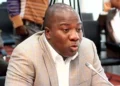
Private legal practitioner Kofi Bekai asserts that regardless of the format or stage of submission, the petition seeking the removal of Acting Chief Justice Justice Baffoe-Bonney must be subjected to the necessary constitutional processes by the President.
He contended that even if the petition were disregarded before Justice Baffoe-Bonney is officially vetted, approved, and sworn in, the outstanding petition seeking his removal would still need to be addressed.
Mr. Bekai asserts that the argument of the petition being premature misses the central point, which is whether the allegations have merit, warrant a formal probe, and are cardinal enough to halt the appointment.
Speaking in an interview on Nyankonton Mu Nsem on Rainbow Radio 87.5FM, he reiterated that proceeding with the confirmation while ignoring the petition would only delay the inevitable need to deal with the allegations.
A Ghanaian citizen, Mr. Ghande Nalin Yussif, submitted the petition on October 6, 2025, seeking the removal of the Acting Chief Justice from office.
The document formally invokes Article 146(1) of Ghana’s 1992 Constitution, the provision that outlines the grounds and procedures for removing Superior Court judges. Under this constitutional clause, a Justice of the Superior Court can only be removed for stated misbehaviour, incompetence, or physical or mental inability to perform official duties.
The petitioner’s allegations focus on what he describes as improper conduct by Justice Baffoe-Bonnie, which allegedly constitutes a violation of Ghana’s Judicial Code of Conduct for Judges and Magistrates.
Mr. Yussif further claims this behaviour contradicts the Bangalore Principles of Judicial Conduct, an internationally recognized framework for judicial ethics. Specifically, the petition contends that the Acting Chief Justice made inappropriate statements to a plaintiff involved in a pending constitutional case.
Reacting to the developments, Mr. Kofi Bekai stated that the Acting Chief Justice’s current status—whether acting or confirmed—is immaterial to the President’s immediate obligations.
”You can wait for him to be confirmed first before triggering your actions, or you can stop him from being confirmed as the Chief Justice. However, no matter the shape or form of the petition, after the President receives such a petition, he is bound by law to send it to the Council of State for consideration and advice,” Mr. Bekai stressed.
He added that the priority is not to determine if the petition is premature. The most crucial consideration is to determine whether the issues raised are cardinal or cogent enough to require resolution before approval.
”If you ignore it and confirm him, the petition will still come. If you want to prevent that, you should first deal with the petition, stay your hand, and wait until the processes are concluded before approving him to officially assume office,” he advised.
By: Rainbowradioonline.com/Ghana