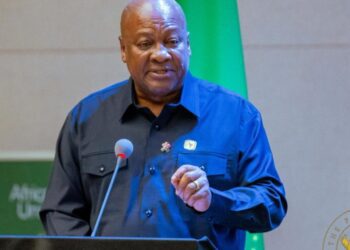
Minority Leader Alexander Afenyo-Markin warns that current policies are favouring foreign businesses over local ones, pushing Ghanaians out of their own markets.
He made the remarks during a March 31 engagement between the Minority Caucus and the Ghana Employers’ Association.
The Association raised concerns over what they described as mounting pressures across key sectors of the economy.
“The picture described by council members is of an operating environment that consistently advantages foreign capital over domestic enterprise: in access to finance, in regulatory treatment and in the informal norms that govern market access,” he said.
The Member of Parliament for Efuttu claimed the situation was due to polucyminority choices thbe must he addressed.
He opined that Ghana’s industrialisation agenda is at risk if local businesses remain unable to compete effectively.
“This is a policy outcome, and it is one tminorityMinority rejects,” he stated.
“Ghana’s industrialisation agenda cannot be advanced while domestic manufacturers are structurally unable to compete in their own market,” he stressed.
He stated that the concerns raised by the Association were not limited to only one sector but multiple sectors including mining, manufacturing, agriculture and trade, with many of the challenges traced to policy decisions taken without adequate consultation.
“The discussions… produced a consolidated account of an organised private sector operating under an accumulating burden of policy failures, most of them avoidable and many the direct product of legislative and regulatory decisions taken without genuine prior engagement with those most affected.”
“Industry bodies reported submitting formal written representations on pending legislation, receiving no substantive response and then watching their concerns be disregarded as if they had never been raised,” he added.
Leading a delegation that included Patricia Appiagyei, Jerry Ahmed Shaib, Kwaku Agyeman Kwarteng, Kojo Oppong Nkrumah, Michael Okyere Baafi, Fred Kyei Asamoah, Vincent Ekow Assafuah, Tweneboah Kodua Fokuo, John Darko, Frederick Addy, Gloria Owusu and Damata Ama Appianimaa Salam, Afenyo-Markin said the concerns point to deeper structural failures.
The lawmaker inandted that stressed that policy instability and regulatory uncertainty are discouraging investment and weakening local enterprise.
“The cumulative burden… has produced an effective tax rate that is, by independent analysis, among the highest of any comparable mining jurisdiction in the world,” he said.
Additionally, he criticised the use of AI-driven systems at the ports, stating that the system was imposing unjust costs on businesses.
“In these cases, it is a system generating inflated assessments against businesses that were doing nothing wrong, at considerable cost to them,” he said.
“Any deployment of AI in a revenue or enforcement context must meet the relevant legal, technical, and procedural standards,” he said.
He added that “Ghana’s employers are not askfavours.”favours. They are asking for a state that engages before it acts, a regulatory environment that is stable and proportionate and a Parliament that takes the private sector seriously enough toit.”end it”.
He added that on all fronts, the government has fallen short, and the Minority will hold it to account.
By: Rainbowradioonline.com/Ghana