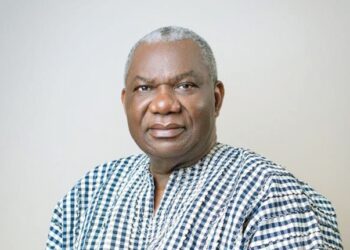
The Director of Communications for the United Party (UP), Solomon Owusu, has argued that the Supreme Court’s 5–2 majority decision – ruling that all registered party members in good standing must be allowed to vote in internal leadership and parliamentary elections – will not end vote buying or the monetisation of politics. Instead, he believes the ruling will compound the challenges that have plagued political parties for years.
Speaking in an interview on Nyankonton Mu Nsem on Rainbow Radio 87.5FM, Owusu noted that although the three plaintiffs approached the court to resolve election manipulation, corruption, and monetisation, the verdict fails to tackle these core issues.
He explained that some politicians in opposition secure funding from dubious sources – including drug dealers, illegal miners, and criminal elements – and then resort to mismanaging state resources once in power to fund their political activities.
Owusu questioned the practical definition of a member in “good standing”, pointing out that many grassroot supporters cannot afford daily meals, let alone party dues. He cautioned that wealthy politicians might simply pay dues for thousands of supporters to secure their votes, creating a system where politicians quietly register people solely to build a loyal voting block in internal contests.
Rather than expanding the voter base, Owusu argued that the focus should be on tracking the sources of campaign funds and investigating appointees who amass sudden wealth after entering government.
“The outcome of the case will not solve the problem. The issue of corruption, if we want to deal with it, must first start from those politicians who, within a short period of being appointed to office, pick forms to contest, share money and other items so they can win elections. These are serious matters. We must be bold in demanding answers from people who share money for votes,” he said.
“We should investigate and determine how politicians contesting elections fund their campaigns. How can people running campaigns share these items and money? That must be the focus. Someone who had no company, factory, or anything, and yet is able to mobilise resources after being given an appointment in government to fund campaigns and share money to delegates, must show where they got the money.”
To address the issue, Solomon Owusu proposed shrinking the delegate pool and raising the bar for who gets to vote, ensuring electors cannot be easily bought.
“We should let those who accept money from politicians before voting for them know that when they win power, they will certainly find ways to recoup their investments. We should have focused on reducing the number of delegates and having people of a high-quality standard who cannot be influenced by money. Imagine you have the calibre of delegates like Sir Sam Jonah or Otumfuo Osei Tutu II – can you convince them with money to vote for you? You can only convince them through your vision. So let’s focus rather on improving the calibre of our delegates,” he added.
He maintained that the best way to select presidential and parliamentary candidates is not necessarily through popular votes, suggesting that parties could instead design vetting structures to approve the most qualified candidate from among the options.
He also raised concerns about how political parties will fund such expanded voting systems, warning that without state support, the door remains wide open for moneyed interests to hijack internal party democracy.
By: Rainbowradioonline.com/Ghana