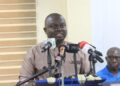
Minister for Energy and Green Transition, Dr. John Abdulai Jinapor, has highlighted Ghana’s rapid transition to electric mobility and its ambition to supply electricity to Nigeria.
Observing that Ghanaians are adopting electric vehicles to save about 40 percent on fuel costs, he noted that Ghana leads the African EV market.
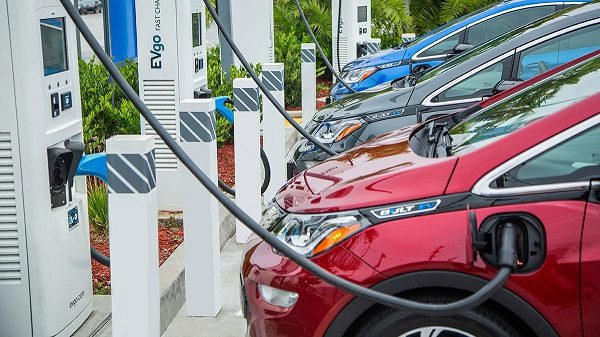
Speaking at the 2026 Future of Energy Conference in Accra, the Minister warned that uncoordinated expansion and 10-to-15-minute fast-charging stations draw significant power that could strain transformers and local distribution networks.
To protect the national grid, the Energy Commission now mandates prior approval for individuals, companies, and institutions intending to install charging stations or battery-swap systems, allowing authorities to reinforce infrastructure beforehand.
“Our research shows that when you use EV vehicles, you save about 40percent on the cost of fuel alone. So naturally, Ghanaians are opting for EV vehicles,” he observed.
He added, “So what we are saying is that you’d need permission to set up those EV charging stations from the Energy Commission. That gives us the opportunity to reinforce the grid to install more transformers to accommodate the charging stations.”
Simultaneously, Ghana is expanding generation and transmission capacity using natural gas, renewables, and nuclear power to support the domestic 24-Hour Economy initiative while positioning the nation as West Africa’s primary energy hub.
GRIDCo already maintains active cross-border interconnections to export electricity to Togo, Benin, Côte d’Ivoire, and Burkina Faso. Adding Nigeria—a market of over 200 million people—represents the next major opportunity, though Jinapor acknowledged it will require further transmission expansion to handle the volume.
“So clearly, this falls in line with our vision, and we believe that if we can achieve this, Ghana can become an energy hub for the whole of the West African region in the shortest possible time,” he added.
By: Rainbowradioonline.com/Ghana